Private Tour of the Pinacoteca di Brera
Book the private tour with a guide at the Pinacoteca di Brera in Milan by filling out the booking form on the right!
PRIVATE TOUR: Pinacoteca di Brera
Book the private tour with a guide at the Pinacoteca di Brera.
Duration: Approximately 2 hours
Language: English or any other language of your choice
Included in the price: 2-hour guided tour service, entrance tickets with reservation, headsets for groups of more than 10 participants.
To get an estimate: Please use the booking form on the right, select the date, the number of people, and the preferred language.
Availability: Daily except for Mondays, New Year’s Day, May 1st, and Christmas Day.
Itinerary: The tour includes the main works of the Pinacoteca di Brera. For more information about the works on display, please see below.
Children: Free for children under six years old. There is no need to mention them in the booking form. For children aged 6 to 18, please select the 6-17 years ticket.
THE PINACOTECA DI BRERA IN MILAN
The collections of the Pinacoteca di Brera originated from the concentration of paintings confiscated following the suppression of churches and convents during the Teresian and later Napoleonic eras. Over time, the collections expanded, allowing the exhibition of a series of portraits and self-portraits by artists, as well as works like The Marriage of the Virgin by Raphael, Madonna with Child by Giovanni Bellini, and The Crucifixion by Bramantino.
When Milan became the capital of the Kingdom of Italy in 1805, the Pinacoteca received the most important paintings confiscated from churches in regions conquered by Napoleon’s armies: works from Veneto, Emilia Romagna, and the Marches were brought to Brera. To address the noticeable absence of works by Leonardo and Raphael, twenty-three paintings and drawings were forcibly exchanged from the Archbishop's Gallery in Milan, and thanks to an agreement with the Louvre Museum, five paintings by Rubens, Joardens, Van Dyck, and Rembrandt arrived at Brera, representing the 17th-century Flemish school.
During the same period, frescoes were detached from Milanese and Lombard churches by artists such as Bernardino Luini, Gaudenzio Ferrari, Vincenzo Foppa, Bergognone, and Bramantino, thus creating one of the largest collections of this kind.
After the Restoration (1815), the growth of the Pinacoteca’s collections continued at a reduced but steady pace, mainly thanks to bequests, donations, exchanges, and purchases (among these, the Dead Christ by Mantegna, bought from the heirs of Giuseppe Bossi in 1824, and the Madonna of the Roseto by Luini, which arrived at Brera in 1826).
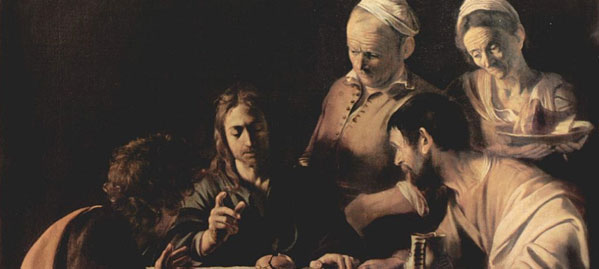
In 1882, the Pinacoteca, like the Galleries of Venice and Bologna, became independent from the Academy of Fine Arts, which retained responsibility for most of the 19th-century paintings. Bequests and purchases continued until World War II, bringing important works by Correggio, Pietro Longhi, Piazzetta, Tiepolo, Canaletto, and Fattori to the museum, as well as The Supper at Emmaus by Caravaggio and The Pergola by Silvestro Lega, which were acquired thanks to the Amici di Brera (Friends of Brera) and the Milanese Museums Association.
Due to the heavy bombing that hit Milan in 1943, the Brera palace was severely damaged. The Napoleonic halls were completely destroyed, but it was quickly rebuilt with a new layout by Pietro Portaluppi and reopened in 1950.
In the 1970s, the extraordinary donation of Emilio and Maria Jesi enriched the collections, including works by major early 20th-century artists such as Boccioni, Braque, Carrà, De Pisis, Marino Marini, Modigliani, and Morandi. Additionally, part of the collection of Lamberto and America Vitali was entrusted to the museum in 2001. These are the most significant episodes in the slow but constant growth of the museum's collection.
Cancellation Policy for This Product, cick here